
TikTok's Return to the US: What You Need to Know About Its Current Status
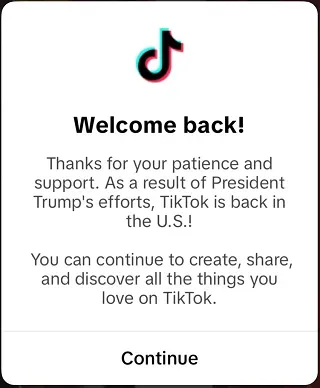
After a turbulent few months of legal challenges, Senate hearings, and cybersecurity investigations, TikTok is once again operational for many U.S. users, but the app’s future remains uncertain.
TikTok Resumes Service, But Not Fully
TikTok became unavailable in the United States for about 20 hours, following a U.S. government sell-off bill aimed at addressing national security concerns. However, the app has now been restored for users who already had it installed before the blackout. New users, however, are still unable to download TikTok from the app stores.
Trump’s Role in the TikTok Saga
In an interesting turn of events, President-elect Donald Trump has directly intervened in the matter, encouraging the companies involved in distributing TikTok—specifically Apple and Google—to keep supporting the app. Trump has been pushing for an extension of the deadline set by the U.S. government, to allow for a potential deal that would address national security issues while keeping TikTok operational.
Trump remarked:
“I’m asking companies not to let TikTok stay dark! I will issue an executive order on Monday to extend the period of time before the law’s prohibitions take effect, so that we can make a deal to protect our national security. The order will also confirm that there will be no liability for any company that helped keep TikTok from going dark before my order.”
App Stores Hesitate to Comply
Despite Trump’s assurances, Apple and Google have declined to reverse the ban, citing the risk of violating the new law, which imposes severe financial penalties for companies involved in distributing or maintaining a foreign adversary-controlled application. The bill states:
“It shall be unlawful for an entity to distribute, maintain, or update (or enable the distribution, maintenance, or updating of) a foreign adversary-controlled application… A violation of this law could result in a civil penalty up to $5,000 per user.”
As a result, Apple and Google are reluctant to allow TikTok back on their platforms without clearer legal protections.
Oracle’s Involvement
While the app stores remain hesitant, Oracle—who hosts TikTok’s data and supports its day-to-day functionality—has continued its partnership with the app. This means that U.S. users who already have TikTok installed can continue using the app, but new users are still unable to download it.
A Potential Legal Dilemma
While Trump is optimistic about finding a resolution, his actions raise potential legal issues. As he is not yet president, his ability to issue binding orders is limited, and it remains unclear whether he can extend the deadline for TikTok’s forced sale to a U.S. company after the law has already been enacted.
This scenario could create significant complications, especially for Oracle, which is relying on Trump’s intervention to avoid legal repercussions. Furthermore, Trump’s statement about a potential joint venture between TikTok and a U.S. company adds a financial dimension to the situation. He proposed that the U.S. should hold a 50% ownership stake in TikTok’s U.S. operations, positioning the app as a valuable asset, potentially worth billions of dollars.
The Bigger Picture: A Global Trend?
The U.S. government’s actions regarding TikTok may set a precedent for other countries to impose similar laws, ostensibly for the protection of user data. However, such moves could also lead to significant financial and tax advantages for local entities involved in these deals.
Conclusion: What’s Next for TikTok in the U.S.?
While TikTok is functional again for many U.S. users, its future is far from secure. The legal challenges and the push for a U.S.-based solution remain ongoing. For now, TikTokers in the U.S. can continue using the app, but those hoping to download it in the future will need to wait for further developments. It seems there is still a long way to go before TikTok’s situation is fully resolved.
Stay tuned for updates as the story unfolds!